

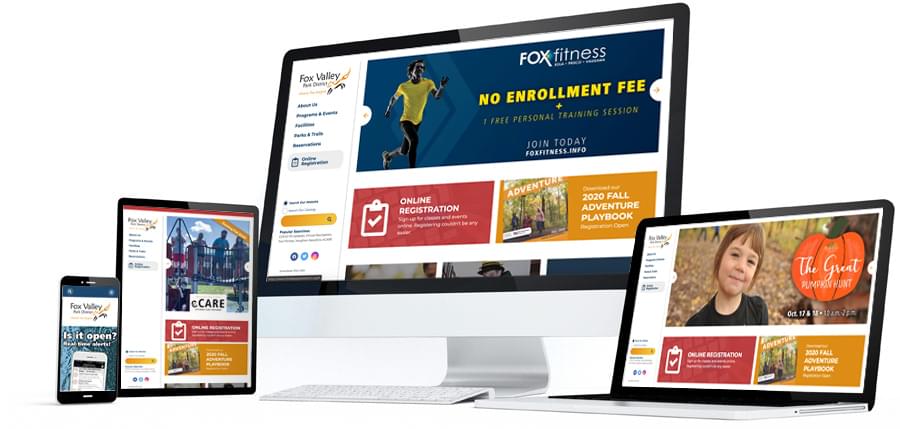

As the calendar rushes forward, many of our clients and colleagues are thinking not only about their personal goals for the coming year, but what might change in their businesses, too. And for many of us, a new website – or some substantial upgrades – is a great way to kick off a brand-new business year.
But you don’t just want any website: you want to keep up with the latest trends and best practices. With that in mind, here are four things to keep in mind for your next business web project:
It’s all about simplicity. The sheer number of websites out there these days, in your industry or any other, means it’s getting harder for people to find what they’re looking for. Make sure your site clearly explains what you do, and that it’s easy for a viewer to make their way quickly towards the information they need.
Your customers are going mobile. The growth of next-generation mobile devices in North America isn’t big… it’s huge. More clients than ever are coming to you from outside their homes and offices, so make sure your website is mobile-ready.
Video is where it’s at. For marketing messages to customer service and frequently asked questions, lots of business issues can be cleared up more quickly with video, so make it a centerpiece of your new design.
Don’t ignore the business on your doorstep. The Yellow Pages haven’t disappeared yet, but they seem to be on their way out the door. More and more, customers are turning to the web even for local purchases. Make sure your site is local search optimized.
Giving your company’s website a fresh look, and some new functionalities, is a great way to start the new year. Remember these tips, incorporate the key features, and you’ll be ready to tackle more business than ever in 2012.
There are roughly 144 million tweets sent out every day, many of them from celebrities, corporations with a social media marketing staff of dozens of young people, and major news organizations that have enormous followings. So how can you get yours to stand out in the crowd? And better yet, how can you use them to help your business?
There are really two answers to this question. The first is to set the right expectations. Unless you are enormously popular, the chances that you’re going to sell anything directly from Twitter are pretty slim. With that in mind, your focus shouldn’t necessarily be on making the cash register ring, but driving traffic to your site, your blog, or some landing page.
Once you have that goal firmly in mind, then take a time-honored tradition out of the marketer’s playbook and think like your average grocery aisle magazine editor. That is, condense the headline of your message into something that’s quick, easy to read, and attention-grabbing enough to make sure that it’s hard to think about anything else for at least a few seconds.
If you’re at a loss for inspiration, then take this advice literally. Go to your local super market and see what kinds of stories are being peddled. We guarantee you’ll find promises of salacious celebrity breakups, lizard babies hatching from swamps, and maybe even a doomsday prediction or two. None of these might be particularly true, but they are great examples of pulling readers in.
It goes without saying that we aren’t actually advising you to make up something crazy, irresponsible, or libelous; what we are telling you to do is think outside the box. No one cares that “Jane Expert predicts steady growth in the coming years,” but it’s hard for your customers and colleagues to ignore your advice for “record-breaking profit margins.”
The challenge for anyone wanting to market themselves or their products on Twitter is rising above the noise. Focus on driving traffic to your site by grabbing quick bites of attention, and you’ll be doing just that in no time.
By: Andy Clements
Somewhere in their first few months of working with a professional online marketing team, most clients start to notice something interesting: there are a lot of numbers and metrics when it comes to measuring the success of your company’s website. But contrary to popular belief, that’s not just because those of us in the industry love working with spreadsheets, or simply want to justify the amounts we get paid.
The fact of the matter is, your web analytics can probably tell you a lot more than you realize – including how well your company is doing online, where new orders are coming from, and even what your future is likely to be like. Aren’t those things you want to keep a close eye on?
Here are a handful of tips for translating the hard numbers from your web analytics into real-time business data and making your company as profitable as it possibly can be:
- Traffic isn’t everything. Lots of small business owners like to concentrate on the number of “hits” or “visitors” their website receives a certain month, and certainly those are important benchmarks. But just as critical are the traffic sources, what pages they are arriving on, the amount of time spent on your website, where you rank for certain keywords on the major search engines, and other important details that are often hidden in analytics reports. If you can’t find these statistics displayed prominently, ask your Internet marketing team to find and explain them.
- You should count more than sales. Obviously, the amount of new accounts, revenue, online sales, and so on generated by your website are important figures. But like the number of hits you’re seeing, it’s easy to miss the forest for the trees by concentrating solely on new sales. Pay attention to other factors as well, such as the number of people signing up for your online newsletter, or the traffic coming to you from unpaid sources. They could be strong indicators of how your website will be doing in the near future.
- Some things are hard to measure in the short term. Speaking of the future, it’s worth mentioning that not every online marketing campaign or tactic is going to bear fruit immediately. Some tools, especially search engine optimization (SEO) and social media marketing are notorious for taking a bit of time to get going. Lose your patience and pull the plug too soon, and you could miss out on a flood of new orders later.
- Customers often come from the places you’d least expect. Very frequently, new clients (or even online marketing teams themselves) come into the process with preconceived notions about the best ways to reach customers online. Sometimes these are accurate, but sometimes they aren’t. Keep an open mind and commit to trying anything that seems to make sense, or has the potential to be cost-effective; every once in a while you can stumble upon something that ends up being a lot more profitable than you imagined it would be.
- There’s one number you should never ignore… and it’s not the one on your online marketing invoice. The most important figure you can keep your eye on, once you’re online marketing campaigns is running for a few months, is your return on investment. That is, what are you getting out of your different activities compared to what you’re putting in? This sounds like common sense, but it’s frequently overlooked by business owners who fail to see the benefit of an activity that’s working gradually, or just as often, someone who’s too excited about a particular tactic or promotion to realize that it’s costing them more than it’s worth.
- Capturing contact information isn’t just important… it’s all important. When looking at your website metrics, keep things in perspective. It would be nice to have a customer list that’s growing from day one, but even more important is bringing new leads and potential buyers into your contact list. Why is that? Because there are lots of potential customers who aren’t going to buy the first time they hear from you no matter how strong your marketing campaign is. It could be that they’re not ready, that they have another company they are used to buying from, don’t have money at the moment, or any of 100 other reasons. If you have their name in a way to reach them, however, the chances that they’ll eventually buy from you go up exponentially.
It’s easy to be overwhelmed by the constant flow of data and statistics coming from your small business website. Rather than becoming frustrated and ignoring them, to make a point of looking for the truth and trends behind the numbers you see on the screen – it might take a little bit of time, but it’s also going to make your business stronger and stronger with every new spreadsheet that comes in.